Call for Papers: Current Trends in Information Technology
Exploring cutting-edge research across Data Management, Information Databases, Network Technologies, Programming Languages, Intelligent Organization, and Emerging Multidisciplinary Trends.
Current Trends in Information Technology (CTIT) is a distinguished peer-reviewed hybrid open-access journal, proudly launched in 2011. Our mission is to facilitate the rapid publication of groundbreaking, fundamental research papers across all facets of Information Technology, embracing its diverse and multidisciplinary domains.
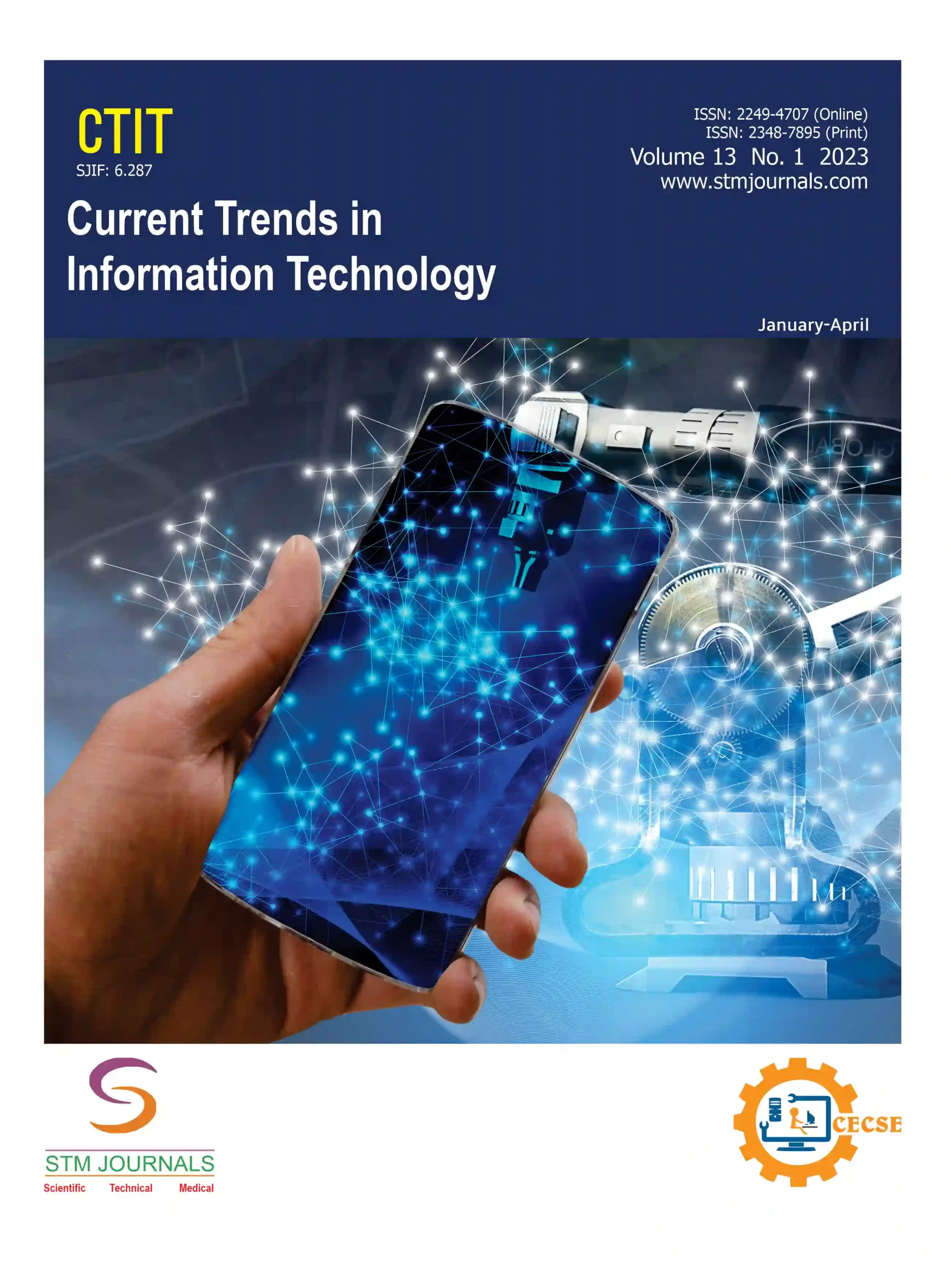
About Current Trends in Information Technology (CTIT)
Current Trends in Information Technology (CTIT) stands as a beacon for scholarly advancements in the dynamic field of Information Technology. Since its inception in 2011, CTIT has been committed to providing a robust platform for the dissemination of original, high-quality research. As a peer-reviewed hybrid open-access journal, we bridge the gap between innovation and accessibility, ensuring that vital research in Information Technology reaches a broad global audience, fostering collaboration and accelerating progress.
Our journal encompasses an expansive scope, welcoming contributions that push the boundaries of knowledge in Data Management, from intricate data processing and data storage solutions to nuanced aspects of data governance, data security, and data privacy. We delve into the complexities of big data management, unstructured data management, real-time data analysis, and emerging paradigms like blockchain databases and quantum computing for data systems, as well as distributed databases and decentralized data architectures. Authors exploring IoT data management, including sensor data and device data, along with data streaming, data pre-processing, and data analytics, coupled with insights into edge computing for IoT and cloud-based IoT data management, particularly those with a focus on sustainability-aware IoT solutions, will find a discerning home for their work. Furthermore, we actively encourage submissions in AI/ML data management, covering critical areas such as feature engineering, model training data, data labeling, data annotation, the principles of explainable AI (XAI), responsible AI data practices, and innovative methods for privacy-preserving data analysis. For healthcare data management, research on Electronic Health Records (EHRs), medical imaging data, paramount issues of patient privacy, robust data security in healthcare, the imperative of interoperability of healthcare data, and novel AI applications in medical data interpretation are highly valued. Within cybersecurity data management, papers analyzing security logs, leveraging threat intelligence, strategies for incident response, advanced data forensics, sophisticated anomaly detection, the efficacy of Security Information and Event Management (SIEM) systems, and secure cloud data storage solutions are especially pertinent.
In the realm of Information Databases, CTIT explores everything from foundational database design, effective database systems, and comprehensive information systems to advanced information retrieval techniques and crucial query optimization. We seek contributions on sophisticated data modeling and efficient schema design, covering both traditional relational databases and contemporary non-relational databases. Our scope extends deeply into big data databases, including systems like Hadoop, Spark, diverse NoSQL databases, and architectural solutions such as data lakes, data warehouses, data marts, and scalable distributed file systems integral to advanced big data analytics. For unstructured data management, we invite research on text databases, document databases, multimedia databases, XML databases, JSON databases, and innovative approaches to semantic information extraction. In real-time data analysis, papers on stream processing, complex event processing (CEP), dynamic real-time data visualization, high-performance in-memory databases, and specialized time-series databases are highly relevant. Furthermore, we emphasize research on knowledge graphs and semantic databases, including aspects of ontology design, the evolving Semantic Web, effective knowledge representation, sophisticated reasoning over knowledge graphs, and the application of SPARQL query language. We are also at the forefront of exploring quantum computing for databases, including novel quantum query algorithms and advancements in quantum-enhanced database operations. The transformative impact of blockchain databases, encompassing Distributed Ledger Technology (DLT), concepts of immutable databases, the functionality of smart contracts, and secure multi-party computation, forms another critical area of interest.
Our coverage of Network Technologies spans from fundamental network architecture, robust internetworking, efficient protocols, intelligent routing, and advanced switching mechanisms, to paramount concerns of security, optimal performance, crucial optimization, imperative scalability, essential reliability, critical availability, and fundamental resiliency. We also cover modern network management, dynamic cloud networking, transformative software-defined networking (SDN), and efficient network virtualization. Emerging and next-generation advancements such as 5G and 6G networks, ubiquitous wireless networks, expansive mobile networks, seamless Internet of Things (IoT) connectivity, distributed fog networking, pervasive edge computing in networks, adaptable network function virtualization (NFV), secure quantum networking, and efficient LPWAN for IoT are central to our mission. Discussions on advanced topics like sophisticated IP networks, innovative overlay/underlay networks, efficient content delivery networks (CDNs), scalable cloud-based networks, and flexible software-defined wide-area networks (SD-WAN) are particularly encouraged.
For those passionate about Programming Languages, CTIT welcomes research on diverse aspects including precise syntax, underlying semantics, efficient compiler and interpreter technologies, robust runtime environments, effective garbage collection, meticulous memory management, flexible control flow, powerful functions, elegant recursion, foundational object-oriented programming (OOP), expressive functional programming, pragmatic imperative and logic programming, complex concurrency, and efficient asynchronous programming. We are keen on modern innovations such as specialized Domain-Specific Languages (DSLs), agile low-code/no-code platforms, cutting-edge AI-assisted programming, creative generative programming, secure blockchain programming, nascent quantum programming, scalable serverless architecture, and modular microservices-based development. Emphasis is also placed on paramount topics in secure software development, ensuring robust and reliable systems through discussions on memory safety, effective buffer overflow mitigation, adherence to secure coding standards, and proactive software vulnerability management.
The journal also focuses on Intelligent Organization, covering the transformative application of Artificial Intelligence (AI), powerful Machine Learning (ML), and insightful cognitive computing to drive modern intelligent systems and enhance organizational efficiency. This includes themes like comprehensive knowledge management, pervasive automation, strategic decision support systems, imperative data-driven decision-making, impactful digital transformation initiatives, visionary smart cities, and dynamic digital twins. We delve into the critical interface of Human-Computer Interaction (HCI), the vital ethics of AI in organizational settings, the importance of explainable AI (XAI), the principles of responsible AI practices, the necessity of human-in-the-loop AI, and the potential of emotional intelligence systems. Research on domain applications such as EdTech and personalized learning systems, innovative uses in healthcare (e.g., diagnostics, patient monitoring, robotic surgery), impactful financial applications (e.g., fraud detection, credit scoring), optimized supply chain management (e.g., predictive maintenance, logistics optimization), and advancements in government applications (e.g., public safety, traffic management) are highly encouraged.
Finally, CTIT is at the forefront of Emerging Multidisciplinary Trends. This includes vital research on Sustainability and Green IT, focusing on practices like energy-efficient data centers, developing eco-friendly cloud solutions, and implementing sustainable IoT deployments. We explore the profound convergence of Biotechnology and IT, including fields like Bioinformatics, computational biology, and the application of AI in genetic engineering. Innovations in Neurotechnology, such as brain-computer interfaces and advanced cognitive computing systems, are also key areas. We cover impactful Urban technologies, including IT solutions for smart city management and AI-driven urban planning, alongside advancements in Agricultural technology like AI and IoT in precision farming and sophisticated smart agriculture systems. The journal also extensively features the critical Ethical and Social Aspects of Technology, addressing topics such as broader technology ethics, ensuring fairness and bias in AI, building digital trust, and developing effective privacy-preserving technologies. Future-forward communication technologies such as Terahertz communications and quantum secure communications, alongside discussions on the evolving Future of Internet through innovations like satellite internet and global network coverage, are highly relevant. Furthermore, we embrace transformative fields like Augmented Reality (AR), Virtual Reality (VR), the nascent metaverse ecosystems, and the intricate science of affective computing. Research on quantum information processing for IT applications also holds significant interest.
By publishing with CTIT, authors contribute to a globally recognized body of knowledge, enhancing the understanding and application of information technology for a better future. We are proud to be a hub for researchers across data science, data analytics, cybersecurity, and more, driving digital transformation.
Why Submit Your Research to Current Trends in Information Technology?
A Leading Platform for IT Innovation
Current Trends in Information Technology (CTIT) is not just a journal; it’s a vibrant forum for showcasing pivotal research that shapes the future of IT. Our commitment to rapid publication ensures that your work on areas like Artificial Intelligence (AI), Machine Learning (ML), and Deep Learning reaches the scientific community swiftly, maximizing its impact. We are keenly interested in original contributions across the entire spectrum of IT, from foundational theories to practical applications.
Comprehensive Coverage Across Core IT Domains
What research areas does Current Trends in Information Technology cover? CTIT embraces a wide array of topics crucial to modern information technology. Our scope includes, but is not limited to, the intricate world of Data Management—encompassing data processing, data storage, data acquisition, data governance, data security, data privacy, and complex topics such as big data management, real-time data analysis, knowledge graphs, and innovations like blockchain databases and quantum computing for data systems. We welcome papers on specialized areas like IoT data management, AI/ML data management (including explainable AI (XAI)), healthcare data management (focusing on EHRs and patient privacy), and comprehensive studies in cybersecurity data management, including security logs and threat intelligence.
Our focus extends to Information Databases, from traditional database design and query optimization to cutting-edge NoSQL databases, data lakes, data warehouses, and the exploration of unstructured data management, including text, document, and multimedia databases. Submissions on real-time data analysis, in-memory databases, and the advancements in quantum computing for databases are highly relevant.
In Network Technologies, we seek submissions covering network architecture, internetworking protocols, routing, switching, security, and performance optimization. Emerging areas like 5G and 6G networks, wireless networks, mobile networks, Internet of Things (IoT) connectivity, edge computing in networks, and software-defined networking (SDN) are central to our mission. We are also interested in quantum networking and advanced topics such as content delivery networks (CDNs) and SD-WAN.
For researchers in Programming Languages, CTIT provides a platform for discussions on syntax, semantics, compiler and interpreter technologies, and innovations like Domain-Specific Languages (DSLs), low-code/no-code platforms, AI-assisted programming, blockchain programming, and quantum programming. Contributions on secure software development, emphasizing memory safety and software vulnerability management, are particularly valued.
The field of Intelligent Organization is another core area, focusing on the application of Artificial Intelligence (AI), Machine Learning (ML), and cognitive computing to drive digital transformation. We publish research on knowledge management, automation, decision support systems, smart cities, and digital twins. We also cover Human-Computer Interaction (HCI) and the crucial ethics of AI in organizational settings, including explainable AI (XAI) and responsible AI practices.
Finally, our scope encompasses pivotal Emerging Multidisciplinary Trends. This includes research on Sustainability and Green IT, the convergence of Biotechnology and IT (e.g., bioinformatics, AI in genetic engineering), Neurotechnology, and advancements in Urban technologies and Agricultural technology. We also prioritize papers on the Ethical and Social Aspects of Technology, addressing topics like fairness and bias in AI, digital trust, and privacy-preserving technologies. Cutting-edge communication technologies such as Terahertz communications and quantum secure communications, alongside discussions on the Metaverse and virtual reality and affective computing, are highly relevant.
Rigorous Peer Review and Open Access Advantage
How can I publish my paper on Current Trends in Information Technology? Our streamlined submission process and commitment to rigorous, fair, and constructive peer review ensure the highest standards of academic integrity. As a hybrid open-access journal, CTIT provides authors with the flexibility to choose between open access publication, maximizing visibility and reach, or traditional subscription-based access. This model ensures your research contributes directly to the global intellectual commons, fostering faster dissemination and higher citation potential. Our publications are indexed in major databases, guaranteeing broad discoverability for your work in data science, data analytics, and all related IT fields.
Addressing Global Challenges through Research
Research published in CTIT contributes significantly to solving real-world problems. For example, how does advanced Data Management contribute to global health initiatives? Our papers on healthcare data management explore solutions for electronic health records (EHRs) and medical imaging data, ensuring patient privacy and enhancing diagnostic capabilities through AI applications in medical data interpretation. This also includes securing sensitive data via advanced cybersecurity data management techniques. How can we build more resilient and secure digital infrastructures? Contributions in Network Technologies, particularly on cybersecurity, the development of robust 5G and 6G networks, and the agility offered by Software-Defined Networking (SDN), are vital for developing reliable and secure communication systems in an increasingly interconnected world, addressing challenges of scalability and resiliency.
What role does AI play in sustainable development and ethical innovation? CTIT features research on Intelligent Organization and Emerging Multidisciplinary Trends that address issues like energy-efficient data centers, eco-friendly cloud solutions, and sustainable IoT deployments, driving forward Green IT initiatives. How do we ensure the ethical development and deployment of new information technologies? Our journal provides a critical platform for discussions on the broader ethics of technology, including crucial topics like fairness and bias in AI, building and maintaining digital trust, and fostering responsible AI practices. These discussions are essential for the widespread, beneficial adoption of transformative technologies like Blockchain and Quantum Computing, ensuring their societal value. We also highlight breakthroughs in AI-assisted programming and low-code/no-code development that democratize technology creation, while simultaneously considering their societal implications and need for secure software development practices.
How is Current Trends in Information Technology addressing the future of digital interaction? Our coverage extends to the evolving landscape of human-computer interaction (HCI), exploring innovative interfaces and user experiences. We are particularly interested in research contributing to the burgeoning fields of Metaverse and virtual reality, exploring how these immersive environments will reshape data, networks, and human engagement. Furthermore, studies on digital twins offer profound insights into predictive modeling and optimization across industries, while advancements in robotics and automation redefine operational efficiencies. By fostering discussions on these multidisciplinary areas, CTIT aims to be the definitive source for understanding and shaping the technological future.
Simplified Submission Process
Submitting your manuscript to CTIT is straightforward. We encourage authors to review our detailed Journal Details and Submission Guidelines available on our website. Our editorial team is dedicated to providing efficient communication throughout the review process, ensuring a positive experience for all authors. We seek papers that demonstrate originality, scientific soundness, and significant contributions to the field of information technology, including topics like digital transformation, human-computer interaction (HCI), and advancements in robotics and automation.
Frequently Asked Questions
CTIT is a peer-reviewed hybrid open-access journal established in 2011, dedicated to the rapid publication of fundamental research in all areas of Information Technology. Our broad scope includes, but is not limited to, Data Management, Information Databases, Network Technologies, Programming Languages, Intelligent Organization, and various Emerging Multidisciplinary Trends. We aim to cover cutting-edge advancements in areas such as AI, Machine Learning, Big Data, IoT, Blockchain, Cybersecurity, Quantum Computing, and Digital Transformation.
Yes, CTIT operates as a hybrid open-access journal. This means authors have the option to publish their articles open access, making their research freely available to a global audience immediately upon publication, or through traditional subscription access. This model ensures wide dissemination and maximizes the visibility and impact of published research.
Publishing with CTIT offers several advantages: rapid publication through an efficient peer-review process, high visibility due to our hybrid open-access model and indexing in prominent databases, and the opportunity to contribute to a highly respected journal focused on critical, contemporary IT trends. Your research will reach a diverse readership of academics, researchers, and industry professionals, fostering innovation and collaboration in areas like Data Science, AI-assisted programming, and ethical technology development.
To submit your manuscript, please visit our dedicated submission portal linked on our website. We recommend reviewing our detailed author guidelines and scope to ensure your paper aligns with the journal’s focus. The submission platform provides step-by-step instructions for preparing and uploading your research. We look forward to receiving your valuable contributions to the field of Information Technology!
Absolutely! CTIT is at the forefront of publishing research on advanced and responsible technologies. We actively encourage submissions related to Quantum Computing for data systems and databases, as well as the critical field of AI Ethics, including topics such as fairness, bias, explainable AI (XAI), and responsible AI practices within organizational and societal contexts. These emerging areas are crucial to the future of information technology.